
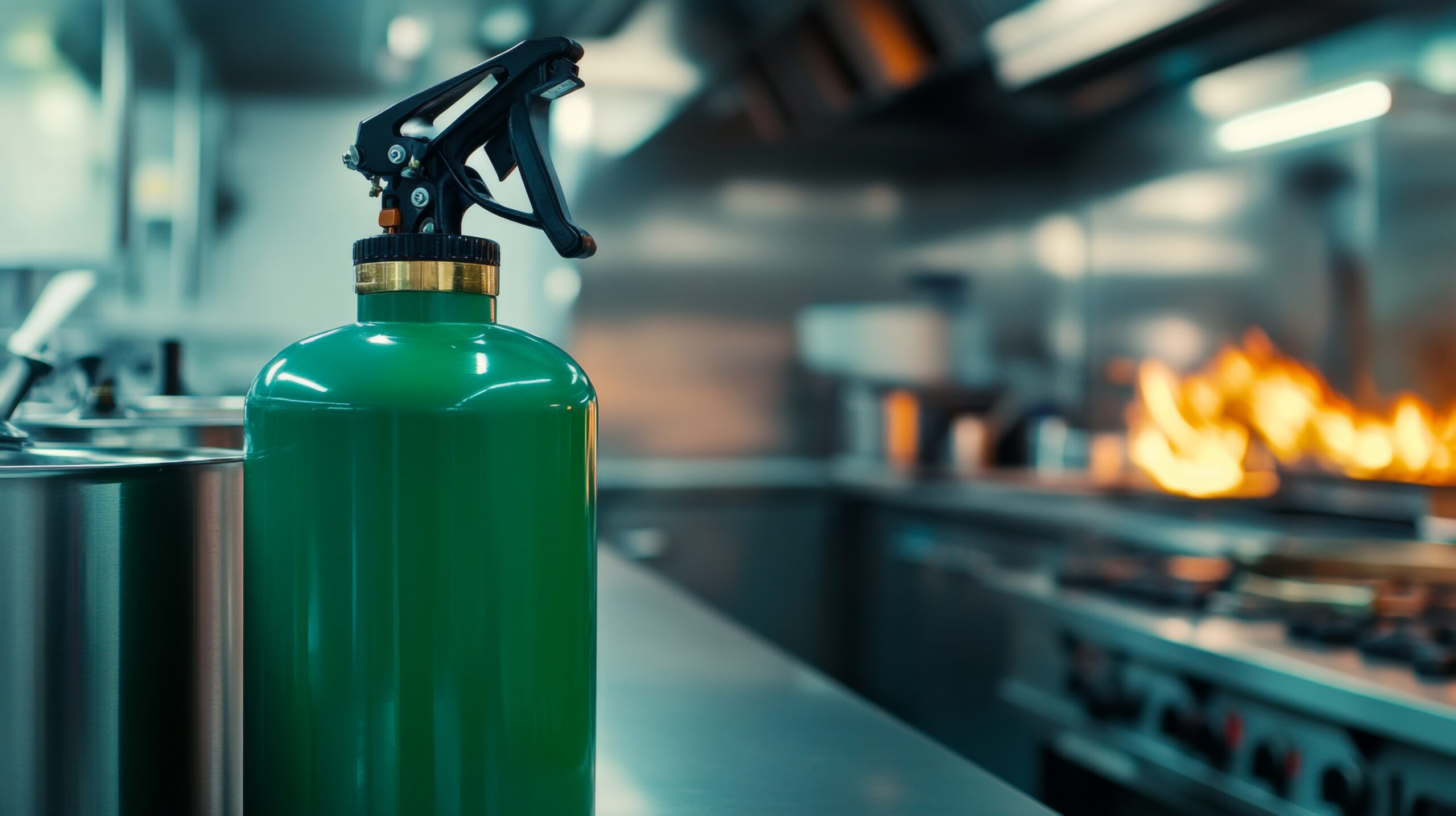
A Class K fire extinguisher is designed to put out fires involving cooking oils, animal fats, and grease. These extinguishers use a wet chemical agent that cools and smothers high-temperature kitchen fires standard extinguishers cannot handle safely. Commercial kitchens rely on Class K protection to meet fire code and protect staff.
Commercial kitchens face a unique fire risk. Cooking oil and grease can ignite at temperatures far higher than a standard Class B extinguisher is built to handle. A Class K fire extinguisher is used for fires involving fryers, griddles, and other appliances where hot oil is present.
Key Takeaways
- Class K fire extinguishers use a wet chemical agent built specifically for cooking oil and grease fires.
- Standard ABC extinguishers cannot safely handle high-temperature grease fires the way Class K units can.
- Virginia commercial kitchens with fryers or grease-producing equipment are generally required to have Class K coverage.
- Regular inspection and correct extinguisher placement keep kitchens compliant and ready for an emergency.
What Class K Extinguishers Are Built to Protect Against
Class K extinguishers are purpose-built for the fire risks specific to commercial cooking environments. Cooking oils, animal fats, and grease behave differently from ordinary combustibles and require a dedicated extinguisher class to control them safely.
Class K Targets Cooking Oils, Fats, and Grease
Class K fire extinguishers are designed specifically for fires involving cooking oils, animal fats, and grease. The fuels most commonly found in commercial kitchen environments. Fryers, griddles, and flat-top grills all produce the type of high-temperature grease buildup that standard extinguisher classes are not rated to handle safely.
Why Grease Fires Need Their Own Extinguisher Class
When the wet chemical agent contacts burning cooking oil, it triggers a chemical reaction called saponification. This reaction converts the surface of the hot oil into a soap-like foam layer. That foam layer seals off the oil from oxygen and stops the fire from reigniting.
What Makes Kitchen Fires Harder to Control
Grease fires can reach temperatures well above 600 degrees Fahrenheit, hot enough for the oil to reignite after the flames appear extinguished. The wet chemical agent in a Class K extinguisher cools the oil surface as it smothers the fire. This dual action prevents flashback, a common risk with fires fought using the wrong tool.
Why Class K Extinguishers Are Not General-Purpose Extinguishers
It is engineered for fires fueled by cooking oils and animal fats, not electrical equipment or ordinary combustibles. Using the wrong extinguisher class on a fire can make the situation worse instead of controlling it.
Why Standard ABC Extinguishers Fall Short In Kitchens
An ABC extinguisher uses dry chemical powder designed for wood, paper, flammable liquids, and some electrical fires. That dry powder does not cool grease fires effectively and can scatter burning oil across a kitchen surface. This is why an ABC unit alone does not meet code requirements near commercial cooking equipment.
Class K Extinguisher Requirements for Virginia Commercial Kitchens
Virginia commercial kitchens that use fryers, griddles, or other grease-producing equipment are generally expected to maintain Class K fire protection under applicable fire codes. Requirements often connect to the type of cooking equipment and any kitchen suppression system already installed.
Which Businesses Typically Need Class K Coverage
Restaurants, school cafeterias, hotel kitchens, and food trucks with deep fryers or flat-top grills commonly fall under Class K requirements. Any commercial kitchen producing significant grease as part of daily cooking operations should assume this equipment applies.
Where Class K Units Belong in a Commercial Kitchen
Class K extinguishers are placed near fryers, griddles, and other appliances that produce grease buildup during regular use. Proper placement means the unit is reachable within a few steps of the hazard without blocking exits or walkways. Kitchen layout and appliance placement both factor into where a technician recommends mounting the unit.
How Class K Requirements Connect to Kitchen Suppression Systems
Many commercial kitchens already have a wet chemical suppression system installed above fryers and grills. A Class K portable extinguisher works alongside that system as a backup for smaller flare-ups the suppression system has not yet triggered. Both systems are typically inspected together to confirm they function as intended.
What Inspectors Look for During a Kitchen Visit
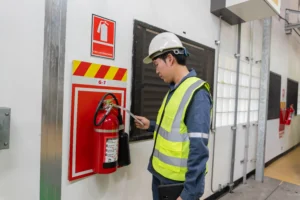
A fire inspector checks that Class K extinguishers are mounted within reach of cooking equipment and have a current inspection tag. They also check for discharge, damage, or obstruction. Missing tags or blocked access are common issues that can delay a kitchen’s inspection approval.
How Often Class K Extinguishers Need Service
Class K extinguishers typically require an annual inspection along with periodic internal maintenance, similar to other fire extinguisher classes. Kitchens with heavy daily use may need more frequent visual checks between scheduled service visits. Documentation from each inspection should be kept on site for the next code review.
Food Trucks and Mobile Kitchens Have Their Own Considerations
A food truck with a fryer or grill faces the same grease fire risks as a fixed kitchen. Mobile units still need a properly sized Class K extinguisher secured in a location accessible during operation. Local jurisdictions across Virginia and Eastern North Carolina may inspect mobile kitchens differently than fixed locations, so confirming requirements early helps avoid delays.
Multi Tenant Properties Face Added Coordination
Property managers may need to track Class K compliance across multiple food service tenants. Each tenant’s cooking equipment may call for a different extinguisher size or placement. Centralizing inspection records helps a property management team stay ahead of renewal dates for every unit on site.
Protect Your Kitchen With the Right Fire Equipment
A commercial kitchen depends on the right fire protection equipment to keep staff, customers, and property safe. Professional Fire Protection Systems works with commercial kitchens across Virginia and Eastern North Carolina on inspection, service, and repair of Class K fire extinguishers and related suppression equipment. If your kitchen needs an evaluation or your extinguishers are due for inspection, contact us to schedule a visit.
Frequently Asked Questions
What is the difference between a Class B and Class K fire?
Class B fires involve flammable liquids and gases in general, while Class K fires specifically involve cooking oils and animal fats in commercial kitchen equipment. Class K fires require a wet chemical agent rather than the dry chemical.
Can an ABC extinguisher be used on a Class K fire?
An ABC extinguisher is not designed for cooking oil or grease fires and generally cannot control them safely. The dry powder does not cool the oil and can scatter burning grease. Commercial kitchens need a dedicated Class K unit.
Are Class K extinguishers safe for home use?
Class K extinguishers are built for the higher grease volumes and temperatures found in commercial kitchen equipment, not typical home stovetops. Most residential kitchens are better served by a smaller multi-purpose extinguisher rated for home cooking fires.
Can you use a CO2 extinguisher for a Class K fire?
A CO2 extinguisher is not recommended for grease fires because it cannot cool the oil enough to prevent reignition. It also lacks the saponification reaction a wet chemical agent provides, making a dedicated Class K extinguisher the safer choice.