A commercial fire extinguisher needs service when its inspection documentation is missing or its pressure falls outside the proper range. Physical damage and overdue maintenance are also warning signs. For facilities across Virginia and Eastern North Carolina, recognizing these issues supports safer, more consistent commercial fire extinguisher service.
Key Takeaways
- Commercial fire extinguishers should be checked for missing tags, improper pressure, corrosion, physical damage, and other service concerns.
- Stored-pressure dry-chemical extinguishers may require six-year internal maintenance and twelve-year hydrostatic testing in addition to routine inspections.
- An extinguisher should receive professional attention after any discharge, including a partial or accidental discharge.
- Facility teams should maintain service records and track maintenance milestones for every extinguisher throughout the property.
- Virginia and Eastern North Carolina facilities can simplify commercial fire extinguisher maintenance through consistent schedules and centralized equipment records.
Signs Your Fire Extinguisher Needs Service or Replacement
Several visible conditions and maintenance milestones can indicate that an extinguisher needs professional attention. Facility teams should recognize these signs during routine walkthroughs.
A Missing or Illegible Inspection Tag
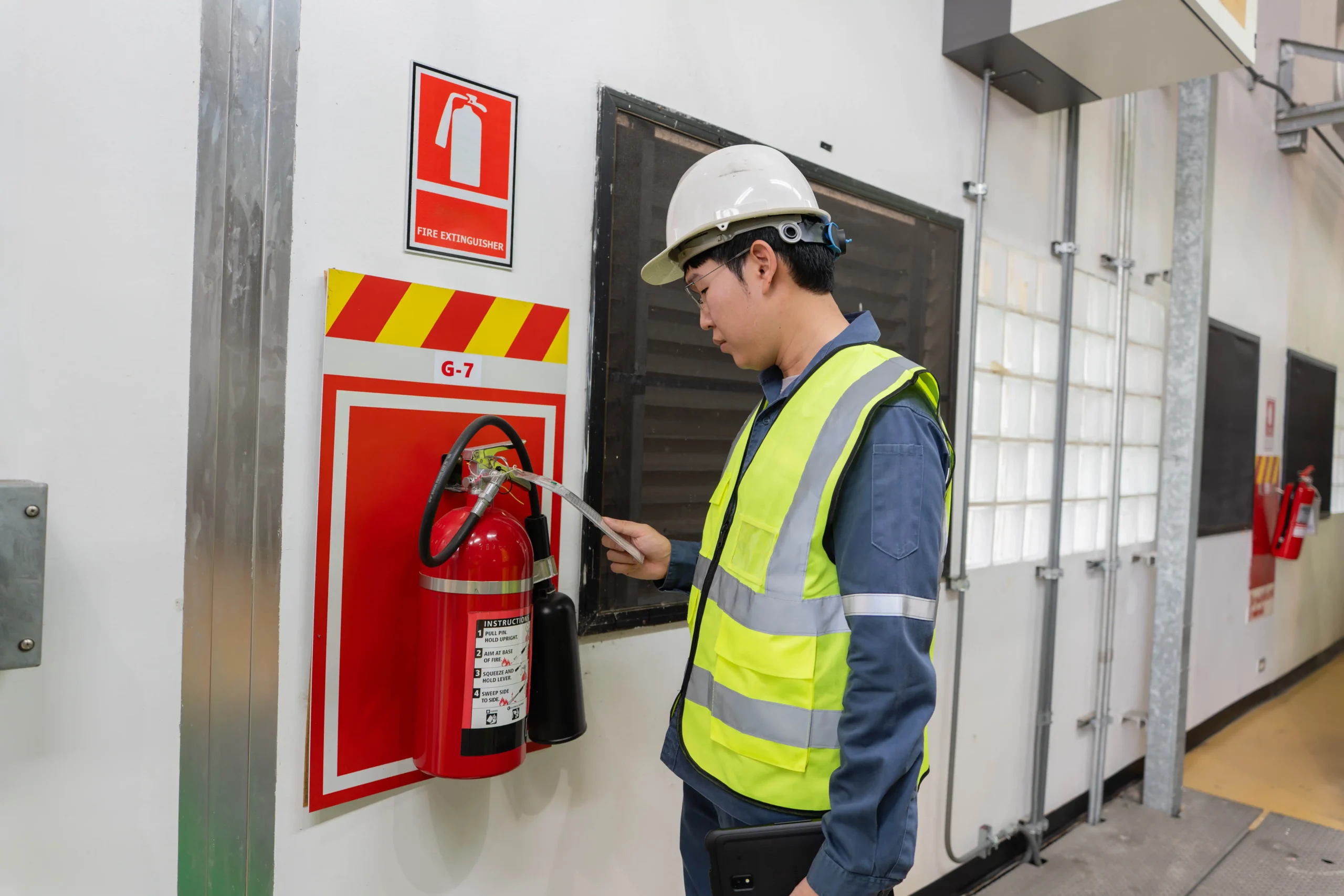
Every serviced extinguisher should carry documentation showing its most recent annual maintenance. The OSHA portable fire extinguisher standard requires employers to perform annual maintenance checks and maintain applicable records.
A missing or illegible tag can make the unit’s service history difficult to verify. Facility managers should review its records instead of assuming the extinguisher is current.
A Pressure Gauge Outside the Green Zone
The gauge needle on a typical stored-pressure extinguisher should remain within its designated operating range. A reading outside that range can indicate a pressure problem requiring professional attention.
During facility walkthroughs, staff should flag abnormal readings for commercial fire extinguisher service. They should not attempt to adjust or repair the extinguisher themselves.
Visible Corrosion or Physical Damage
Dents, rust, corrosion, damaged hoses, or broken seals are common signs a fire extinguisher needs service. Physical damage should not be dismissed because the pressure gauge appears normal. Moisture and harsh storage conditions can also contribute to deterioration. A qualified technician can determine whether maintenance or replacement is appropriate.
Six-Year Internal Maintenance Coming Due
Stored-pressure dry-chemical extinguishers subject to twelve-year hydrostatic testing may also require six-year internal maintenance. This process involves more than a routine visual inspection.
OSHA identifies this maintenance requirement for applicable workplace extinguishers. Facility managers can incorporate these milestones into their broader fire protection services schedule. Doing so helps prevent required commercial fire extinguisher maintenance from being overlooked.
Twelve-Year Hydrostatic Testing Deadline
Certain dry-chemical extinguishers are subject to hydrostatic testing at twelve-year intervals. Other extinguisher types can follow different testing schedules. Hydrostatic testing evaluates whether the cylinder can safely withstand the required pressure.
The NFPA 10 standard development resource provides information about the standard governing portable fire extinguishers. Facility managers should confirm the correct testing schedule for each extinguisher type.
Recharge Needed After Any Discharge
A discharged fire extinguisher should receive professional evaluation before returning to service. Recharge may be required after a complete, partial, or accidental discharge. Even a small discharge can affect the extinguisher’s pressure and readiness.
Understanding when to recharge a fire extinguisher helps prevent a partially used unit from remaining in service. It also supports more consistent fire extinguisher recharge requirements across a commercial facility.
Wrong Extinguisher Class for the Hazard
The extinguisher provided for an area needs to match the hazards present there. Commercial kitchens, electrical equipment areas, offices, and warehouses can present different fire risks.
Facility managers reviewing their broader fire systems should consider each extinguisher’s condition and classification. They should also review whether the unit remains appropriate for the area’s current use.
Next Steps for Virginia and Eastern North Carolina Facilities
Recognizing a potential problem is only the first step. A consistent maintenance process helps facility teams document service and anticipate upcoming requirements.
Schedule Your Annual Inspection on a Consistent Calendar Date
Commercial properties can make fire extinguisher inspection requirements easier to manage with a consistent schedule. OSHA requires workplace portable extinguishers to receive monthly visual inspections and annual maintenance checks.
A regular service period helps teams identify overdue units and coordinate professional maintenance. It also answers an important question about how often fire extinguishers need inspection in commercial workplaces.
Confirm Which Units Are Approaching Six-Year or Twelve-Year Milestones
Facility teams should maintain an inventory with extinguisher types, identifying information, service dates, and applicable maintenance milestones. This approach provides more useful information than checking only the pressure gauge.
Tracking units individually helps managers anticipate deeper maintenance, hydrostatic testing, recharge, or replacement. It also reduces uncertainty about fire extinguisher expiration and scheduled service needs.
Request Documentation After Every Service Visit
Inspection, recharge, maintenance, and testing records help establish what work has been completed. They also help teams determine when future service may be due.
Facility managers should retain service documentation in addition to reviewing physical tags. Centralized records are especially useful for multi-building properties and facilities with numerous extinguishers.
Understand the Compliance Risk of Falling Behind
Expired documentation, missed maintenance, damaged equipment, or an unready extinguisher can create safety and compliance concerns. Requirements can depend on the equipment and jurisdiction involved.
Commercial property managers should address known deficiencies promptly. When requirements are unclear, they should consult qualified professionals or the authority having jurisdiction.
Plan for Multi-Site Consistency Across Properties
Property management groups with multiple facilities can centralize their extinguisher records. This approach avoids using a different tracking method at every location.
A portfolio-wide log can record inspection dates, maintenance milestones, recharge history, and units needing attention. Consistent records can make commercial fire extinguisher maintenance easier across warehouses, offices, campuses, and other properties.
Know When to Call for Fire Extinguisher Service Near You
A missing tag, abnormal pressure reading, visible damage, or recent discharge can indicate a need for professional service. Approaching maintenance milestones can also require attention. Professional Fire Protection serves facilities throughout Virginia and Eastern North Carolina. Its service locations can help commercial property teams identify coverage for their facilities.
Get Your Fire Extinguishers Inspected Before Compliance Becomes a Problem
Fire extinguisher maintenance is easier to manage when inspections, service records, and equipment milestones receive consistent attention. A planned approach can also help facility teams identify service needs before scheduled deadlines are missed.
Professional Fire Protection Systems provides commercial fire extinguisher inspection, service, and repair support across Virginia and Eastern North Carolina.
Contact us to request assistance. You can also schedule service when extinguishers are approaching required maintenance or testing milestones.
Frequently Asked Questions
These common questions address commercial fire extinguisher service, maintenance, inspections, and replacement considerations.
How much does it cost to have a fire extinguisher serviced?
Fire extinguisher service costs depend on the extinguisher type, number of units, and required work. Inspection, recharge, internal maintenance, hydrostatic testing, and replacement involve different service needs. Commercial facilities should request pricing based on their specific equipment inventory.
How much do commercial fire extinguishers cost?
Commercial fire extinguisher pricing varies according to the unit’s size, rating, agent type, and intended hazard. A facility may require different extinguisher types for separate areas. Replacement costs should reflect the equipment appropriate for each specific location and hazard.
How much does it cost to have a fire extinguisher checked?
The cost of checking commercial fire extinguishers can vary by unit count, extinguisher type, property access, and required service. Facilities with multiple buildings should request a quote based on their complete extinguisher inventory and specific commercial fire extinguisher service needs.
Will the fire department service my fire extinguisher?
Fire extinguisher inspection, recharge, maintenance, and testing should be handled by an appropriately qualified service provider. Local fire departments may have different policies and responsibilities. Facility managers should confirm locally rather than assuming they provide commercial fire extinguisher service.