
Commercial properties across Virginia and eastern North Carolina rely on properly selected fire extinguishers to protect people, equipment, and operations. Matching the correct extinguisher class to each hazard area is a critical step in maintaining compliance and ensuring effective fire response.
Understanding the different extinguisher classes helps facility managers make informed decisions for each area of their building. It also reduces the risk of using the wrong extinguisher during an emergency.
Key Takeaways
- There are five fire extinguisher classes, each designed for a specific type of fire risk.
- Using the wrong extinguisher can worsen a fire or create additional hazards.
- ABC extinguishers provide broad coverage but are not ideal for all environments.
- Regular inspection, servicing, and proper placement are required for compliance.
- Facilities must align extinguisher types with actual occupancy and hazard conditions.
How to Match Fire Extinguisher Classes to Workplace Fire Risks
Choosing the correct extinguisher starts with understanding the types of materials and hazards present in each area of a facility. Commercial properties benefit from aligning extinguisher placement with real-world risk zones, not assumptions. Many businesses rely on structured fire systems solutions to evaluate risks and confirm proper coverage across warehouses, offices, and mixed-use spaces.
Class A Extinguishers for Ordinary Combustibles
Class A extinguishers are used for fires involving paper, wood, cloth, and similar materials found in offices, storage rooms, and retail environments. These are widely distributed because ordinary combustibles exist in nearly every occupancy type. In cities like Norfolk and Richmond, facilities position these units along exit routes and high-traffic areas for fast access during emergencies.
Class B Extinguishers for Flammable Liquids
Class B extinguishers are required in areas where flammable liquids or gases are present, including maintenance shops, fuel storage zones, and loading docks. These fires spread quickly and behave differently than solid-fuel fires. Water is not a safe suppression method. Proper placement often follows guidance outlined in standards like NFPA 10, which defines portable extinguisher requirements.
Class C Extinguishers for Electrical Equipment
Class C extinguishers are designed for energized electrical equipment such as breaker panels, wiring systems, and server infrastructure. These extinguishers use non-conductive agents to reduce the risk of electrical shock during use. Commercial facilities across Virginia commonly install these near electrical rooms, data centers, and control panels where downtime can be costly.
Class D Extinguishers for Combustible Metals
Class D extinguishers are specialized units used for fires involving combustible metals like magnesium, titanium, and sodium. These hazards are typically limited to manufacturing, machining, and industrial environments. Standard extinguishing agents can react violently with these materials. Class D units use dry powder agents formulated to safely smother metal fires.
Class K Extinguishers for Commercial Kitchens
Class K extinguishers are required in commercial kitchens where cooking oils and animal fats create high-temperature fire risks. These fires burn hotter than standard flammable liquid fires and require a wet chemical agent to cool and suppress flames. Restaurants and institutional kitchens across Virginia and eastern North Carolina depend on these extinguishers as part of a broader suppression strategy.
ABC Extinguishers for Combined Coverage
ABC extinguishers provide multi-purpose protection for Class A, B, and C fires in a single unit. Many commercial buildings use these in general areas where multiple hazards exist, such as offices and shared workspaces. While convenient, they are not ideal for sensitive environments because the dry chemical agent can damage electronics. Facilities often pair ABC units with more specialized extinguishers.
Key Inspection and Placement Priorities for Commercial Compliance
Proper maintenance and placement ensure extinguishers are accessible and ready when needed. Businesses that follow consistent inspection schedules and documented procedures reduce compliance risks and improve emergency readiness.
Monthly Visual Inspections
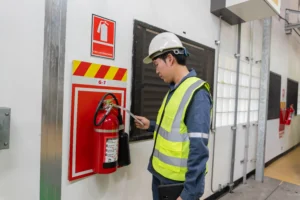
Facilities should perform monthly checks to confirm pressure levels, intact tamper seals, and unobstructed access to each extinguisher. These inspections are typically handled by on-site staff and documented using tags or digital logs. OSHA workplace safety requirements reinforce routine checks, as outlined by OSHA fire protection standards.
Annual Professional Servicing
A qualified technician must complete a detailed annual inspection to verify internal pressure, agent condition, and hose integrity. This service goes beyond visual checks and ensures the extinguisher will perform during an emergency. Many businesses partner with providers offering ongoing inspection and service programs to maintain compliance and accurate records.
Placement Distance and Visibility Requirements
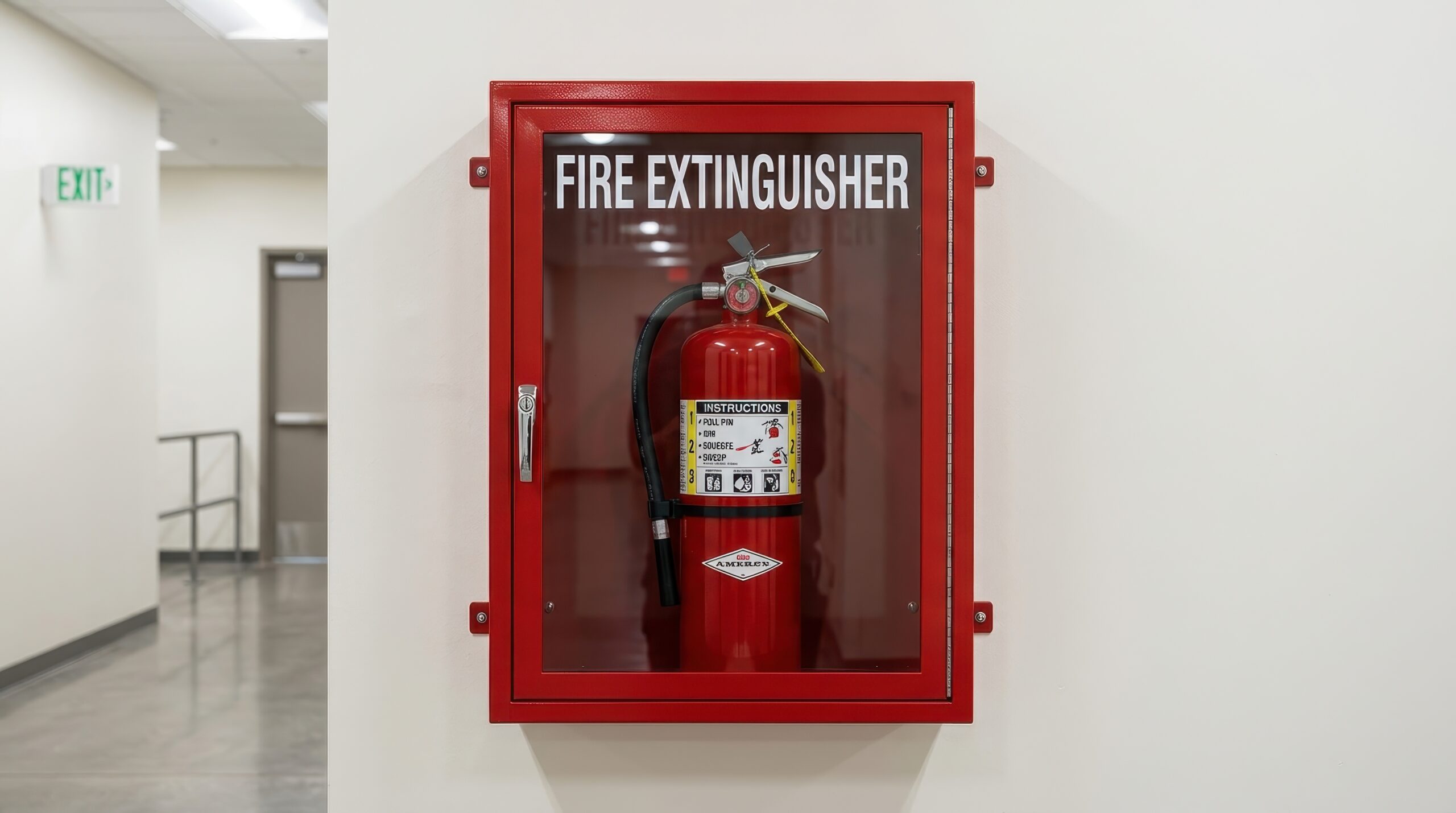
Extinguishers must be installed within required travel distances and remain clearly visible at all times. For example, Class A hazards typically allow up to 75 feet of travel distance, while higher-risk hazards require closer placement. Units should be mounted along normal paths of travel and never hidden behind equipment or storage.
Schedule a Fire Extinguisher Assessment for Your Property
Selecting the right fire extinguisher mix requires a clear understanding of your facility layout and fire risks. Professional Fire Protection Systems supports commercial properties across Virginia and eastern North Carolina with inspection, servicing, and placement guidance. If your building is due for service or needs evaluation, contact us to schedule an assessment.
Frequently Asked Questions
What are the 4 types of fire extinguishers?
The four commonly referenced types are Class A, B, C, and D, which address ordinary combustibles, flammable liquids, electrical equipment, and combustible metals. Class K is an additional category used for commercial kitchen fire risks.
What are Class ABC and D fire extinguishers?
ABC extinguishers combine protection for ordinary combustibles, flammable liquids, and electrical fires in one unit. Class D extinguishers are specialized for combustible metal fires and are typically used in industrial or manufacturing environments.
What are the 5 classes of fire?
The five classes of fire are A, B, C, D, and K, each based on the fuel source involved. Using the correct extinguisher class ensures the fire can be controlled safely without creating additional hazards.
What are the 5 types of fire extinguishers and their colors?
Each extinguisher class uses a symbol and color code for identification. Class A uses green, Class B red, Class C blue, Class D yellow, and Class K black. These markings help staff quickly choose the correct unit during an emergency.