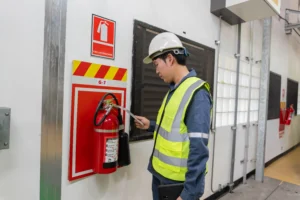
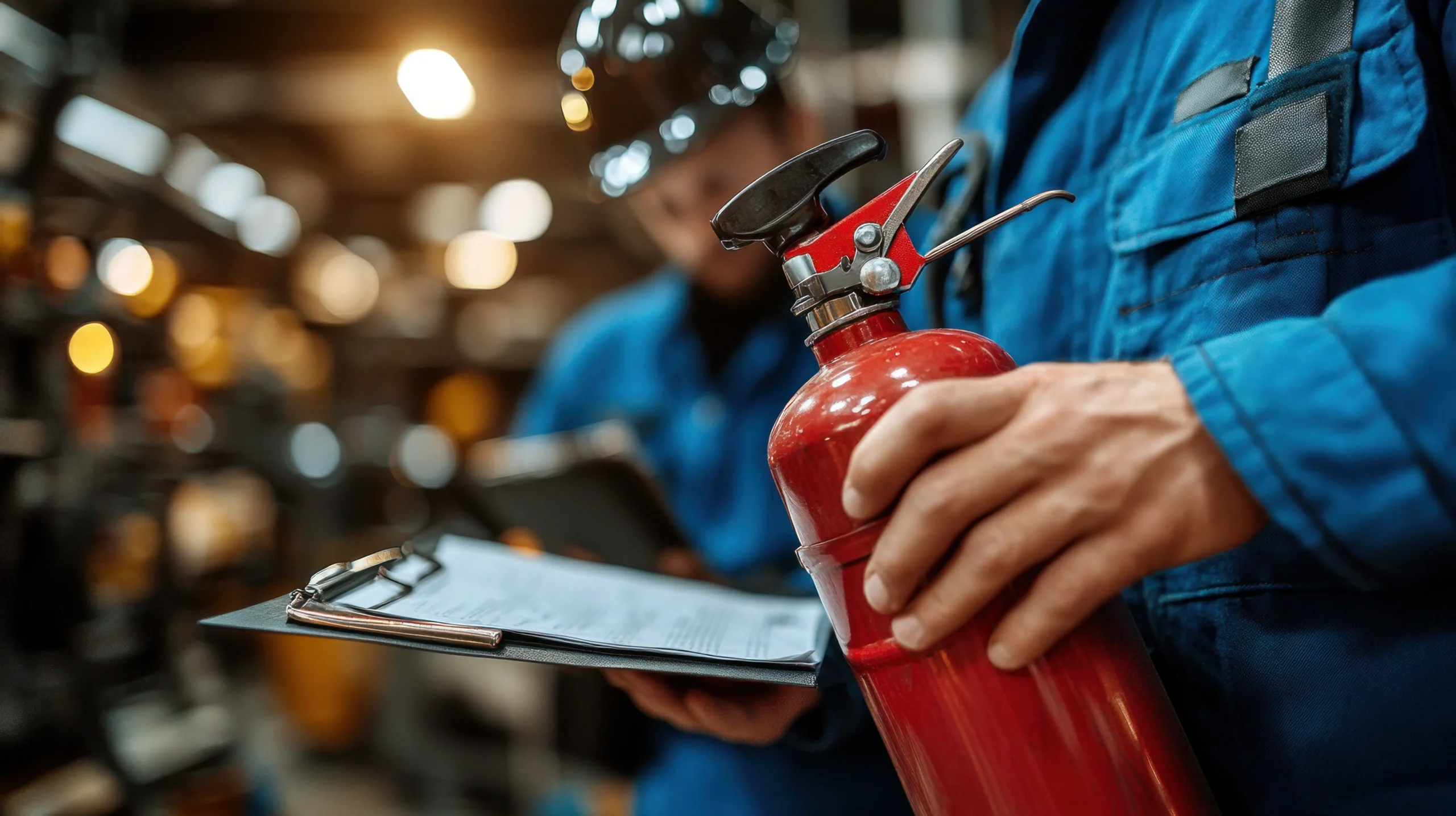
RACE and PASS are two memory aids taught in fire safety training. RACE sets the order of emergency actions, and PASS shows how to operate a portable fire extinguisher.
Employers across Norfolk and Hampton Roads need fire safety training that employees can recall under stress. Warehouses, shipyard suppliers, schools, and multi-tenant buildings all depend on staff who know when to act and when to leave. This article explains how RACE and PASS work, what OSHA requires, how often training should happen, and how to document compliance.
Key Takeaways
- RACE stands for rescue, alarm, confine, and extinguish or evacuate, and it gives employees a simple fixed order of actions.
- PASS means pull, aim, squeeze, and sweep, and OSHA requires annual extinguisher training for employees expected to use portable extinguishers.
- Virginia employers follow VOSH rules, which adopt the federal standard 29 CFR 1910.157 for portable fire extinguishers and employee training.
- Compliance depends on written emergency plans, signed training records, monthly extinguisher checks, and a professional annual inspection, all kept current.
How RACE and PASS Guide Virginia Employees During Fire Emergencies
RACE and PASS work together as a two-part response system. RACE tells employees what to do first, and PASS tells trained employees how to use an extinguisher on a small fire. Each method fits into a broader fire safety training program for staff.
RACE Fire Safety Procedure
RACE stands for rescue, alarm, confine, and extinguish or evacuate. Employees first move anyone in immediate danger to safety.
They then activate the fire alarm and call 911, close doors to confine smoke and flame, and decide whether to extinguish or leave. The order matters because a sounded alarm starts the building response while employees are still acting.
Early Fire Alarm Activation
Sounding the alarm early starts the evacuation and notifies the fire department before a small fire grows. In commercial buildings, a pull station signals a monitored fire alarm system and alerts every occupant at once.
In our experience with commercial properties, delayed alarms usually happen when someone tries to handle a fire quietly first. Fire safety training for employees should state plainly that the alarm comes first.
Closing Doors Helps Contain Fire and Smoke
Closing doors starves a fire of oxygen and slows smoke travel into corridors and exits. Smoke, not flame, blocks most escape routes, so a closed door buys time for evacuation.
This step costs a few seconds and needs no equipment. Employees should close doors behind them as they leave, but never lock them.
PASS Fire Extinguisher Method
PASS stands for pull, aim, squeeze, and sweep. Employees pull the pin, aim the nozzle at the base of the fire, squeeze the handle, and sweep side to side.
Aiming at the base matters because fuel burns at the base, not in the flames above it. Fire extinguisher safety training should include practice with the actual extinguisher type used on site.
When to Use a Fire Extinguisher or Evacuate
Employees should fight a fire only when it is small, the exit is behind them, and the alarm is already sounding. They should leave when smoke fills the room, the fire spreads, or the extinguisher runs empty.
Portable extinguishers discharge for a short time, often under 30 seconds. Training should give staff clear permission to evacuate without hesitation.
OSHA Training Requirements and Compliance Steps for Virginia Businesses
Virginia private employers fall under VOSH, the Virginia Occupational Safety and Health program run by the Virginia Department of Labor and Industry. VOSH enforces fire extinguisher and emergency plan rules that match the federal OSHA standards.
The steps below explain what OSHA fire safety training requires and how businesses in Hampton Roads can stay compliant.
OSHA Fire Extinguisher Training Requirements
OSHA requires employers who provide extinguishers for employee use to offer an education program. The program covers general extinguisher principles and the hazards of fighting early-stage fires.
Employees designated to use extinguishers also need hands-on practice. Employers must provide this training at initial assignment and again each year.
Required Frequency of Employee Fire Safety Training
Employees must receive fire extinguisher training when first hired and at least once every 12 months after that. Employees with extinguisher duties need annual hands-on practice as well.
Emergency action plan training is also required at hire and whenever the plan changes. Many Norfolk employers schedule refreshers during October, which includes Fire Prevention Week.
Emergency Action Plans and Fire Prevention Plans
Two written plans support training: the emergency action plan and the fire prevention plan. OSHA 1910.38 covers the emergency action plan, including reporting, evacuation routes, and employee roles.
OSHA 1910.39 covers the fire prevention plan, including hazards and housekeeping. Employers with 10 or fewer employees may communicate these plans orally.
Fire Safety Training Documentation and Recordkeeping
Compliance requires training records plus working extinguishers. Employers should record the date, topics, instructor, and attendee names for every session. Extinguishers need a visual check each month and a documented annual maintenance check under NFPA 10, the national extinguisher standard.
Coastal Hampton Roads humidity and salt air can corrode cylinders and gauges, so monthly checks catch damage early.
Choosing the Right Fire Extinguisher Training Course
Businesses should choose a course that matches their extinguishers, hazards, and shift schedules. Online fire safety training can cover the education requirement, but it cannot replace hands-on practice for designated users.
Multi-site employers should also confirm that every location uses the same procedures and records. If requirements are unclear, ask the local fire marshal and a qualified fire protection company.
Schedule Fire Extinguisher Training and Inspections in Norfolk and Hampton Roads
Professional Fire Protection is a locally owned company serving Virginia and Eastern North Carolina from Norfolk. The company provides fire extinguisher service, inspection, service, and repairs, and 24/7 on-call technicians for urgent system issues.
Contact us to request a quote or schedule an evaluation.
Frequently Asked Questions
How often must employees receive fire safety training?
OSHA requires fire extinguisher education when employees are first hired and at least annually after that. Employees assigned to use extinguishers also need hands-on practice at assignment and every year.
How do you get fire safety certified?
OSHA does not issue a certificate for extinguisher training, so employers document their own sessions. Many businesses use a qualified instructor, record attendance and dates, and keep records. Ask your insurer or local fire marshal about extra requirements.
What are the 5 steps of fire safety?
One common five-step framework is to prevent fires, detect them early, alert occupants, evacuate or confine the fire, and extinguish only small fires. RACE and PASS cover the response portion of those steps.
Does OSHA require extinguisher training if everyone evacuates?
Employers with a total evacuation policy and no employee extinguisher use do not need to provide extinguisher training. They still need an emergency action plan and evacuation training. Confirm your policy with a qualified fire protection provider.